Herbal Blends for Calm and Focus Compared Honestly
Last Updated: November 25, 2026
Quick Summary
Herbal blends for calm and focus are not interchangeable: calming herbs such as lemon balm, chamomile and passionflower are traditionally used to ease the body down, while focus-oriented herbs such as rosemary, sage and ginseng support alertness. Match the blend to the moment you have in mind, read the label and measure servings carefully.
- Calming herbs include chamomile, lemon balm, lavender, passionflower, linden and oat straw.
- Focus-oriented herbs include rosemary, sage, holy basil and ginseng.
- Lemon balm has better supported evidence at review level for calming effects.
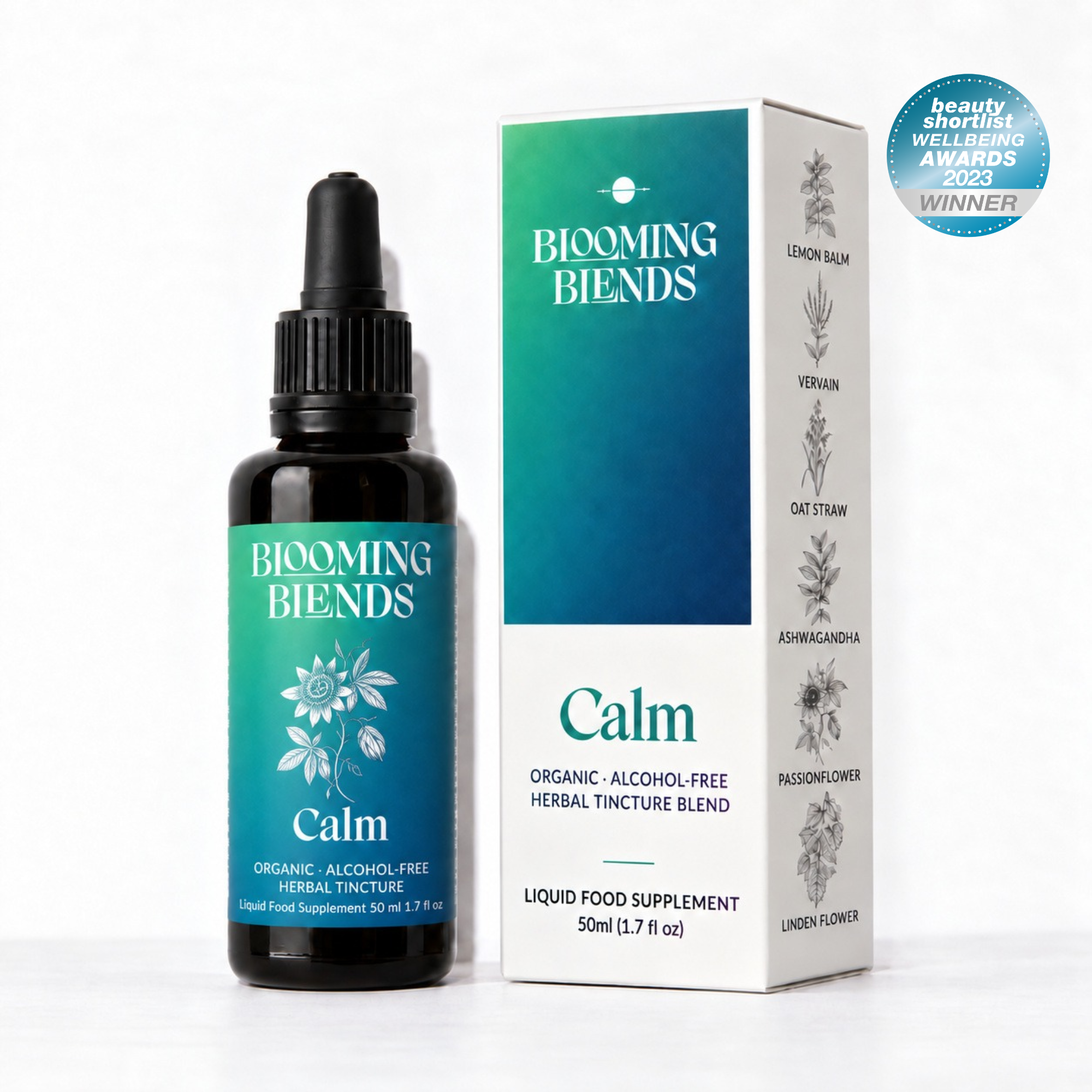
- Calm is a certified organic tincture by the Soil Association in a 50 ml bottle.
- Speak to a qualified healthcare professional first if you take medication, are pregnant or breastfeeding.
Table of Contents
- What Calm and Focus Blends Actually Do
- Herbs for Calm and Focus: What the Evidence Says
- Herbal Blends for Stress and Concentration Compared
- Herbal Tea for Relaxation Versus Liquid Herbs
- Herbal Tinctures for Calm: How to Choose and Use One
- Safety, Suitability and Who Should Ask a Professional
- Find Your Blend
- Frequently Asked Questions
What Calm and Focus Blends Actually Do
Herbal blends for calm and focus compared honestly come down to one awkward truth: most products promise both, and very few are built to deliver either. A blend designed to settle a busy mind works differently from one meant to sharpen concentration, and treating them as interchangeable is where most buying decisions go wrong. At Blooming Blends, we make alcohol-free herbal tinctures, and we would rather you understood that distinction before you spend anything.
The global herbal tea market is forecast to reach USD 5.98 billion in 2026, according to Mordor Intelligence's herbal tea market forecast, which tells you how crowded the shelf has become. Crowded shelves rarely mean clearer choices.
Calming Herbs and Focus Herbs Are Not the Same Job
A calming herb is traditionally used to help the body ease down; a focus herb is traditionally used to support alertness. They pull in opposite directions.
- Calming herbs include chamomile, lemon balm, lavender, passionflower, linden and oat straw
- Focus-oriented herbs include rosemary, sage, holy basil and ginseng
- Adaptogens such as ashwagandha sit between the two, traditionally used for stress support rather than sedation or stimulation
That is why a single bottle claiming to do both deserves a closer look at its label, not its marketing.
Herbs for Calm and Focus: What the Evidence Says
Evidence for herbs for calm and focus is uneven, and the honest answer is that some herbs have more research behind them than others. The table below grades each herb by how much is actually known, so you can tell traditional use apart from early research and from findings that are better supported.
How to Read the Evidence Grades
- Better supported: several studies, including reviews, point in the same direction for a specific outcome.
- Early research: some studies exist but are small, mixed or limited to one preparation.
- Traditional use: long-standing use in herbal practice without strong clinical trials behind it.
A grade describes the herb, not a finished blend. Research on an individual ingredient does not prove that a tincture containing it produces the same result, because extraction, serving size and the other ingredients all differ.
Reading the Evidence Herb by Herb
| Herb | Traditionally used for | Evidence quality | What that means in practice |
|---|---|---|---|
| Lemon balm | Calm, sleep quality | Better supported at review level | A 2024 review in the journal Nutrients on lemon balm and psychological wellbeing reports promise for calming effects and possible cognitive and sleep-quality benefits. Promising, not proven. |
| Chamomile | Gentle relaxation | Traditional, with some research | Widely used as a gentle evening herb; trials are small and often use tea rather than extracts. |
| Lavender | Stress support | Early-stage, aroma studies | Much of the research concerns inhaled aroma rather than lavender taken internally, so treat the findings cautiously. |
| Ashwagandha | Stress support | Growing but limited | An adaptogen with a growing body of research, though studies vary in preparation and duration. |
| Rhodiola | Stress support, alertness | Early research | Traditionally used for tiredness and stress; trials are limited and often small. |
| Rosemary | Mental clarity | Traditional, limited trials | Long used for alertness; clinical evidence for cognitive outcomes is thin. |
| Passionflower | Calm, restlessness | Traditional, some research | Used in Western herbal practice for nervous restlessness; trials are few. |
| Oat straw | Gentle support | Traditional | A gentle traditional herb with little clinical research behind it. |
A 2023 study by Swinburne and co-authors on essential oil aromas and anxiety found small-to-medium buffering effects from aromas, not from herbs taken as tinctures. Keep that distinction in mind when you read confident claims online.
What the Grades Mean for Choosing a Blend
If a blend leans on better-supported herbs, that is a reasonable starting point, but it is not a guarantee. If it leans on traditional herbs, that is not a weakness either, it simply means the evidence base is different. What matters is that the label is honest about what it contains and that you are not promised outcomes the research cannot support.
If you want realistic timelines rather than vague promises, our guide on how long calming herbs take to work sets out what to expect.
Herbal Blends for Stress and Concentration Compared
Comparing herbal blends for stress and concentration means comparing ingredients, format and intended use, not just price. Most products on the shelf claim to do both jobs, so the useful question is which blend suits the moment you have in mind. Here is how our own range lines up, followed by the checks that help you choose.
| Blend | Key ingredients | Best for | Format |
|---|---|---|---|
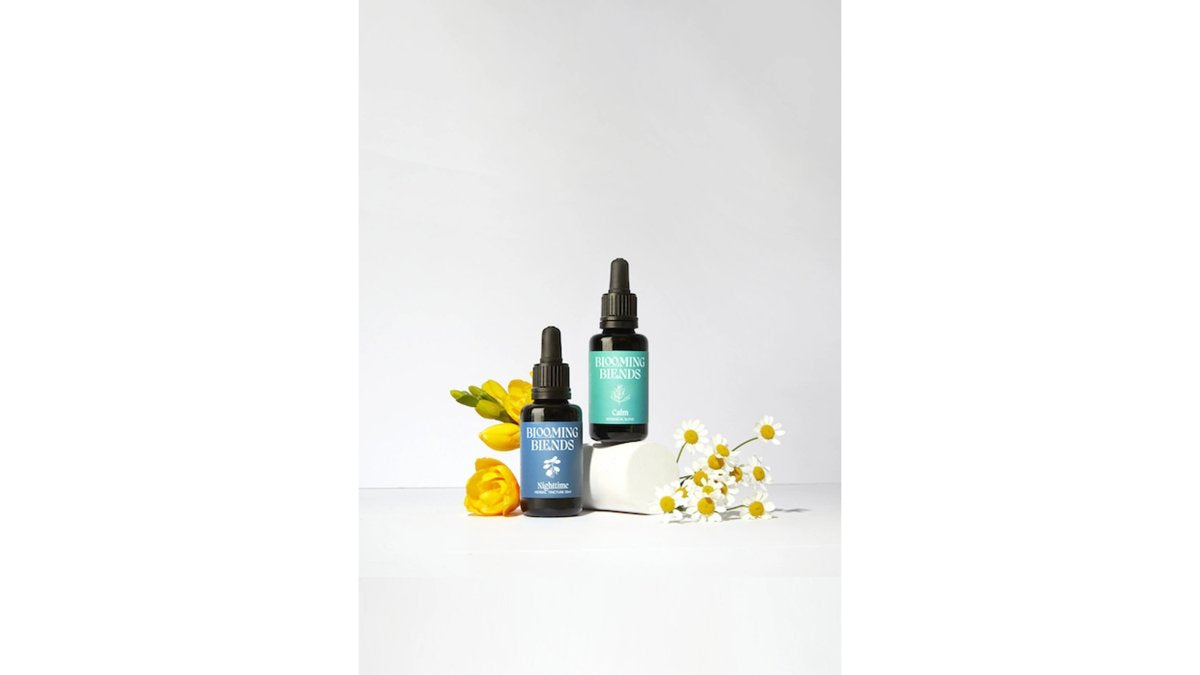
| Calm | Lemon balm, linden, ashwagandha, passionflower, oat straw, vervain | A quiet moment in a busy day | 50 ml bottle, alcohol-free liquid herbs |
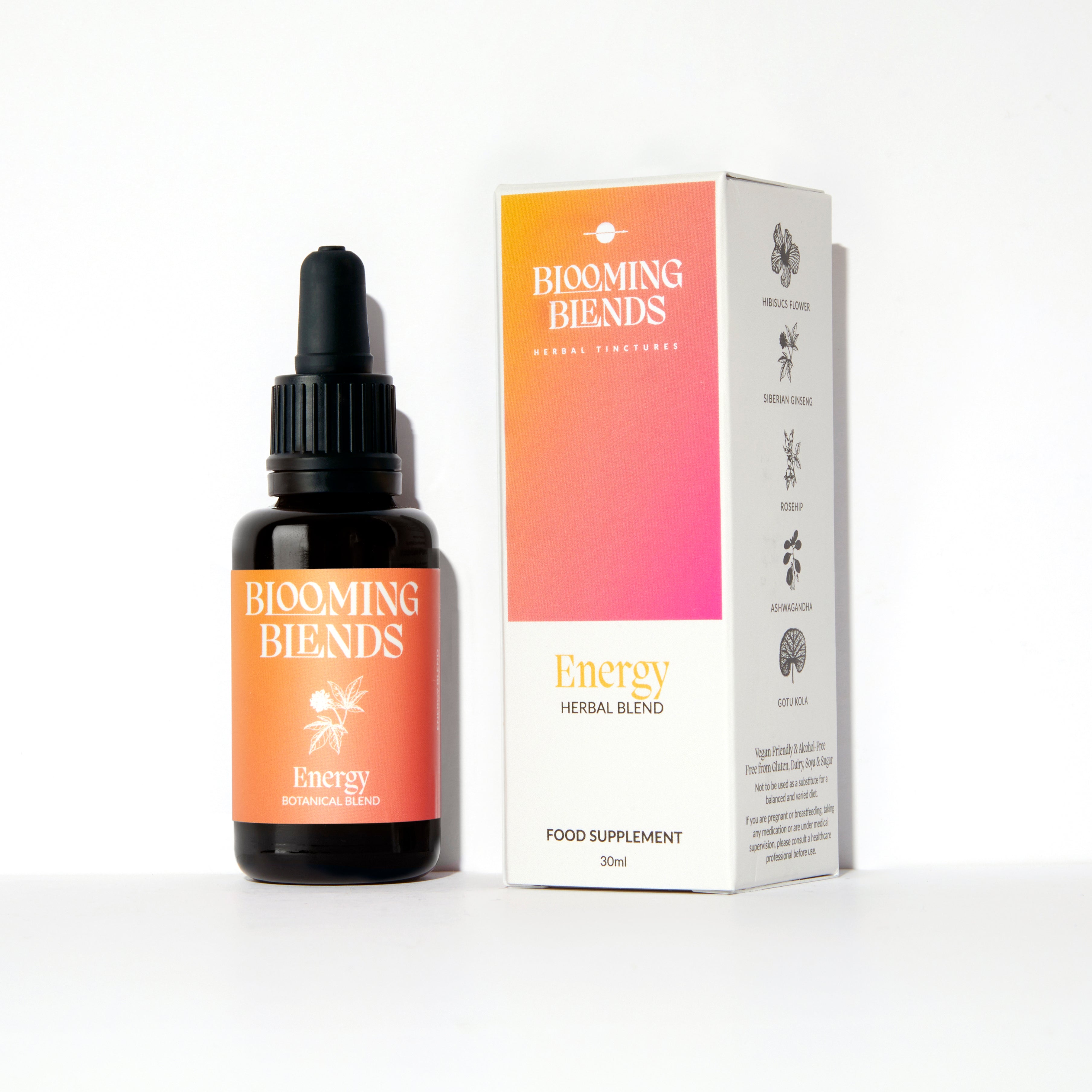
| Energy | Ashwagandha, rose hip, Siberian ginseng, gotu kola, hibiscus | Early starts and busy afternoons | Alcohol-free liquid herbs |
| Nighttime | Hops, lavender, chamomile, passionflower, ashwagandha, catnip | Switching off at bedtime | Alcohol-free liquid herbs |
Calm is a certified organic tincture by the Soil Association and comes in a 50 ml bottle. If you are weighing up a calming blend specifically, you can see the full Calm ingredients and format. For a little plant power on full days, our caffeine-free Energy tincture brings together ashwagandha, rose hip, Siberian ginseng, gotu kola and hibiscus.
A Simple Decision Guide
- Daytime energy: look for a caffeine-free blend built around botanicals and check its listed ingredients.
- Stress-related restlessness: look for calming herbs such as lemon balm, passionflower or linden, and check the label's listed ingredients.
- Evening wind-down: look for a blend with hops, lavender or chamomile, and take it only as the label directs.
Best for: Calm suits anyone who wants a quiet moment in a busy day. Skip if: you are looking for an evening blend, which is Nighttime's job.
Reading the Label Before You Compare
A blend is only as useful as its label is clear. Check these points before you buy:
- Ingredient amounts. Some products list botanicals without amounts, which makes comparison impossible. Prefer labels that state what is actually in each serving.
- Botanical names. Common names vary between products; the Latin name confirms which plant you are getting.
- Extraction and format. Check whether the product is a tincture, a tea or a capsule, and whether it is alcohol-free. Alcohol-free describes the finished liquid, not necessarily the extraction method.
- Certification. Only trust organic claims that name a certifier, such as the Soil Association, and only for the products that carry it.
- Serving directions. Dropper sizes vary between bottles, so never assume a full dropper equals 1 ml. Follow your bottle's directions.
Watch out: a long ingredient list can look impressive while each herb sits at a token amount. A shorter, clearly dosed blend is often the more honest choice.
Trade-offs to Weigh Up
Calming blends can leave some people feeling flat during the day, while focus blends can feel too stimulating close to bedtime. That is why matching the blend to the moment matters more than finding one bottle that does everything. If you take medication, are pregnant or breastfeeding, or are managing a health condition, speak to a qualified healthcare professional before trying a new blend.
Herbal Tea for Relaxation Versus Liquid Herbs
Herbal tea for relaxation and liquid herbs deliver the same plants in very different ways. Tea is familiar, gentle and easy to enjoy; a tincture is concentrated and measured by the drop.
Tea gives you warmth and a pause. Our tinctures are made by extracting whole herbs and are taken in small, measured amounts. Neither is superior. They suit different moments.
Traditional herbal tea mixtures in the Eastern Mediterranean, described in a 2021 comparison by Obón and co-authors, are used for relaxing and digestive purposes and are not consumed as treatment. That framing is worth borrowing: enjoyable, traditional, not medicinal.
Herbal Tinctures for Calm: How to Choose and Use One
Herbal tinctures for calm are concentrated liquid extracts, taken in small measured servings according to the label. Choosing well comes down to five practical checks.
- Choose by occasion. Ask when you plan to use it, then match the blend to that moment.
- Read the label properly. Check the ingredients, the serving size and whether it states alcohol-free.
- Measure accurately. Dropper sizes vary between bottles, so never assume a full dropper equals 1 ml. Follow your bottle's directions, and if you want help, read how to measure tincture servings accurately.
- Follow the stated method. Take it directly or mixed into a drink only where the label supports that.
- Pick a time you will remember. Consistency matters more than perfection.
Safety, Suitability and Who Should Ask a Professional
Herbal does not mean suitable for everyone. Check suitability before you buy, and speak to a qualified healthcare professional first if you take medication, are pregnant or breastfeeding, or are managing a health condition. Herbs can interact with medicines, so a professional who knows your history is the right person to advise you.
Store your tincture as its label directs, away from heat and out of reach of children. If you are unsure whether a blend suits you, ask before you start rather than after.
Find Your Blend
Choosing between herbal blends for calm and focus is easier once you stop expecting one bottle to do everything. Match the blend to the moment, read the label, measure carefully, and give it time.
If a quiet moment in a busy day is what you are after, our Calm tincture brings together lemon balm, linden, ashwagandha, passionflower, oat straw and vervain in a 50 ml bottle of alcohol-free liquid herbs. Not sure which suits you? Explore our tincture collection and find the blend that fits your day.
Start with the moment you most want support, not the loudest label on the shelf. Blooming Blends makes small-batch, alcohol-free tinctures in 50 ml bottles with 50 servings each, preserved with glycerine made from British rapeseed and, for Calm, certified organic by the Soil Association. Explore the range and find the blend that fits your day.
Frequently Asked Questions
Can a herbal blend support both calm and focus at the same time?
Some blends combine calming herbs with herbs traditionally used for clarity, but the two aims pull in different directions, so results vary. Research on individual herbs such as lemon balm does not show what a finished blend will do, so treat such findings as background rather than proof. If you want one bottle for both, check the label lists herbs for each purpose and follow its stated serving. If your main need is one or the other, a single-purpose blend is easier to judge.
How do I compare the ingredients in herbal blends?
Start with the ingredients list and check which herbs are named, whether the blend is alcohol-free if that matters to you, and whether organic certification applies to that specific bottle. At Blooming Blends, our 50 ml Night-time, Calm and Digestion tinctures are certified organic by the Soil Association. Then read the serving directions on your own bottle, because dropper sizes vary between products and bottle sizes. A blend with six named herbs tells you far more than one listing a vague 'herbal extract'.
Are herbal teas or tinctures better for calm and focus?
They suit different moments. Herbal tea is a slower, warming option you sip over several minutes. Tinctures are concentrated liquid herbs taken in small measured servings, so they fit into a busy day without brewing time. Neither is automatically more effective, and the research base differs by herb and by format. Choose tea if you enjoy the pause, and a tincture if convenience matters more. Follow the directions on whichever you pick.
Can herbal blends interact with medication?
They can, which is why the label and your own circumstances matter. If you take prescribed medication, are pregnant or breastfeeding, or are managing a health condition, speak to a qualified healthcare professional such as your GP or pharmacist before starting a herbal blend. Bring the actual bottle so they can see the full ingredients list. This applies to teas and tinctures alike, and to blends marketed for calm and focus as much as any other. Do not stop or change prescribed treatment on the basis of a herbal product.


Written by Fleur Sladen