How to Choose the Best Natural Energy Tincture for Daytime Fatigue
Last Updated: November 2, 2026
Quick Summary
The best natural energy tincture for daytime fatigue names its herbs clearly, states the dose and suits daytime use rather than sleep. Match rhodiola or ashwagandha to stress-driven tiredness, check the extract ratio and serving size, and choose alcohol-free if you avoid alcohol.
- Rhodiola and ashwagandha have the strongest research, though most studies test capsules and extracts rather than tinctures.
- Check the label for an extract ratio such as 1:3 or 1:5 and a named standardisation marker.
- Start at the lower end of the label's serving size, taken morning and early afternoon.
- Give a tincture two to three weeks before judging whether it is helping.
- Persistent fatigue lasting weeks or months needs a GP appointment, not another supplement.
Table of Contents
- Why Daytime Fatigue Calls for a Different Kind of Energy Support
- The Best Herbs for Fatigue and What the Evidence Actually Shows
- Natural Ways to Increase Energy That Work Alongside a Tincture
- What an Alcohol-Free Herbal Tincture Offers Busy Adults
- Causes of Persistent Fatigue You Should Not Ignore
- How to Assess Tincture Quality, Dosing and Timing
- Choosing Your Daily Energy Tincture
- Frequently Asked Questions
Why Daytime Fatigue Calls for a Different Kind of Energy Support
Daytime fatigue is the kind of tiredness that settles in by mid-morning and refuses to lift, and it needs a different response from the caffeine hit most of us reach for.
That distinction matters because the two approaches solve different problems. Caffeine masks tiredness. Herbal remedies are chosen to support energy levels steadily, without the spike and slump that follows a double espresso.
The Best Herbs for Fatigue and What the Evidence Actually Shows
Rhodiola and ashwagandha have the strongest supporting research of the herbs commonly used for fatigue, though most studies look at capsules, powders and standardised extracts rather than tinctures. That gap matters, and this section treats it as the central question rather than a footnote.
Why supplement evidence does not automatically transfer to tinctures
A trial that gives participants 200 mg of a standardised ashwagandha extract in a capsule is testing a specific preparation: a known amount of a named marker compound, delivered in a form that is swallowed whole. A tincture is a liquid extract, often unstandardised, taken in drops, and absorbed differently. The herb may be the same, but the dose of active constituents, the extraction solvent and the serving size can all differ.
Adaptogens: Rhodiola, Ashwagandha and Siberian Ginseng
Adaptogens are herbs traditionally used to help the body manage stress and fatigue. A study of 100 people with prolonged fatigue found that rhodiola supplementation reduced fatigue symptoms, according to GoodRx's review of energy supplements. A 2023 randomised controlled trial reported 28% lower fatigue scores after eight weeks of ashwagandha extract compared with placebo, as summarised in The SRX Formula's review of caffeine-free energy supplements.
Mechanistically, rhodiola is thought to act on the body's stress-response pathways, which is why it is grouped with adaptogens rather than stimulants; ashwagandha is studied mainly for stress and sleep quality, and its fatigue benefit may be indirect, working through better stress regulation rather than a direct energy boost. If you want the fuller picture on ashwagandha and Siberian ginseng, our guide to adaptogens covers the history, safety updates and how to choose a quality product. You can also read more about Siberian ginseng and where it appears in our blends.
Traditional Herbs: Nettle, Oat Tops, Maca and Raspberry Leaf
Nettle, oat tops, maca and raspberry leaf have long traditional use behind them, but far thinner clinical evidence than the adaptogens. Healthline's roundup of herbs for energy and focus lists ginseng, sage, guarana, bacopa, peppermint, rosemary, rhodiola and ashwagandha among the herbs most often cited for energy and alertness.
Maca is traditionally associated with stamina and is classed as a nourishing root rather than a stimulant. Oat tops are covered in more depth on our oat straw page.
Herbs with stimulant or alerting effects
Some herbs commonly listed for energy work differently: guarana, for example, owes its effect to naturally occurring caffeine, and sage, peppermint and rosemary are traditionally used for alertness and mental focus rather than physical stamina. These are worth knowing about because they blur the line between a caffeine-free tincture and a stimulant one. If avoiding caffeine is your reason for choosing a tincture, check the ingredient list for guarana, green tea, yerba maté and kola nut, all of which contain caffeine.
| Herb | Traditional use | Strength of evidence | Caffeine? |
|---|---|---|---|
| Rhodiola | Fatigue, stress support | Moderate (supplement studies) | No |
| Ashwagandha | Stress, fatigue | Moderate (extract trials) | No |
| Siberian ginseng | Stamina, traditional tonic | Limited clinical data | No |
| Maca | Stamina | Limited clinical data | No |
| Nettle and oat tops | Nourishing tonic herbs | Traditional use only | No |
| Guarana | Alertness | Caffeine-driven | Yes |
Vitamin and mineral support alongside herbs
Herbal tinctures are not a source of vitamins and minerals in meaningful amounts. B vitamins and vitamin D are the nutrients most often discussed in relation to energy and fatigue, and a GP can check your levels if deficiency is suspected. A tincture should not be positioned as a replacement for diagnosed deficiency treatment, and if you are taking a supplement alongside a tincture, mention both to your pharmacist so interactions can be checked.
Natural Ways to Increase Energy That Work Alongside a Tincture
No tincture compensates for poor sleep, and that is the honest starting point. The natural ways to increase energy that genuinely move the needle are unglamorous: consistent sleep and wake times, daylight in the morning, regular movement, and meals built around protein and fibre rather than sugar.
A herbal tincture works best as one layer of that routine, not a replacement for it. Take it at the same time each day, pair it with a proper breakfast, and give it a few weeks before judging results.
- Fix your sleep window before buying anything
- Get outside within an hour of waking
- Move for twenty minutes daily
- Cut late-afternoon caffeine
- Take your tincture consistently, at the same time each day
What an Alcohol-Free Herbal Tincture Offers Busy Adults
An alcohol-free herbal tincture is a concentrated liquid herbal extract made without ethanol, usually finished with glycerine instead, and it suits anyone who wants to avoid alcohol in their daily routine.
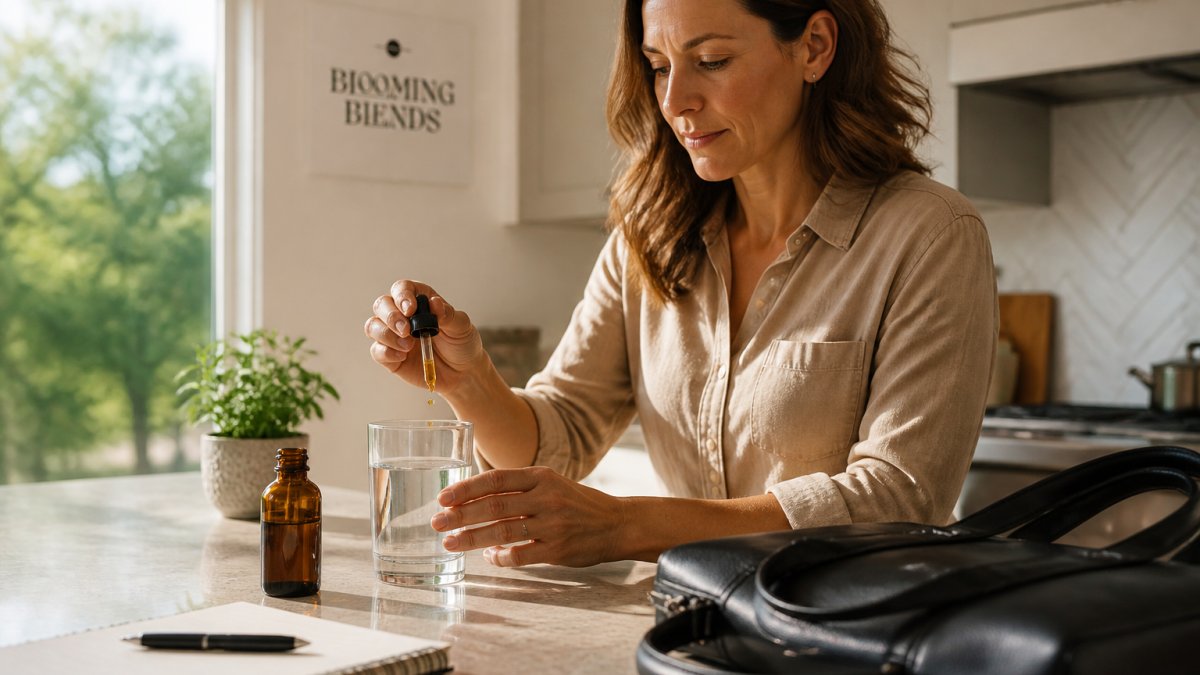
Practicality is the other draw. Drops go into water in seconds, need no swallowing of tablets, and slot into a bag for travel.
Causes of Persistent Fatigue You Should Not Ignore
Persistent fatigue that lasts weeks or months deserves a GP appointment, not another supplement. The causes of persistent fatigue range from iron deficiency and thyroid problems to sleep apnoea, depression and diabetes, and these need proper testing rather than guesswork.
Watch out: if your tiredness comes with breathlessness, unexplained weight loss, low mood or heavy periods, book an appointment before you buy any herbal product. A tincture cannot fix an underlying condition, and delaying a diagnosis is a real risk.
Herbal support is generally considered for the everyday dip, the mid-afternoon slump in an otherwise healthy life.
How to Assess Tincture Quality, Dosing and Timing
Quality, dose and timing are the three things you can actually control when choosing a daytime energy tincture, and each has concrete markers you can check before spending anything.
Reading the label: extract ratio and standardisation
A tincture label should state an extract ratio, written as something like 1:3 or 1:5. The first number is the weight of dried herb and the second is the volume of solvent, so a 1:3 extract is more concentrated than a 1:5. Ratios are not a universal measure of quality, a low ratio of a well-standardised herb can outperform a high ratio of a poorly extracted one, but a stated ratio is a sign the maker knows and discloses what they are doing.
Alcohol-free versus alcohol-based
Alcohol-free tinctures are usually glycerites, where glycerine replaces ethanol as the solvent. Glycerine is a different solvent from ethanol, so the ratio and serving size of an alcohol-free tincture are worth checking on the label. That is not a reason to avoid alcohol-free products; it is a reason to check the ratio and serving size rather than assuming the two formats are interchangeable. For anyone avoiding alcohol for medication, religious or personal reasons, a glycerite is the practical choice, and the label should say clearly that it is alcohol-free rather than leaving you to infer it.
Testing, transparency and contamination
A credible maker will tell you what is in the bottle and what is not. Look for a full ingredient list with Latin plant names, a stated serving size per dose, and no "proprietary blend" wording that hides individual amounts. Third-party testing for heavy metals, pesticide residues and microbial contamination is the strongest quality signal, and some makers publish certificates of analysis on request. If a product claims organic status, check for a recognised certification rather than a marketing phrase.
- Full Latin plant names listed
- Extract ratio stated
- Standardisation named, if claimed
- No proprietary blends
- Clear serving size per dose
- Alcohol-free claim verified on the label
- Third-party testing or certificate of analysis available
Dosing and timing: a cautious approach
There is no universal dose for herbal tinctures, and anyone who gives you one is overstating the evidence. The reliable starting point is the label's serving size, taken at the lower end of the stated range.
Titration means changing one variable at a time. If the lower dose does nothing after a fortnight, move to the upper end of the label range rather than doubling it, and hold there for another two to three weeks.
When to stop
Stop and seek advice if symptoms worsen, if you develop any new medication needs, or if you are due to have surgery, some herbs can affect bleeding or blood pressure and are usually paused beforehand on medical advice. A tincture is not a long-term substitute for investigating persistent fatigue, and if three to four weeks of consistent use makes no difference, that is useful information rather than a reason to keep increasing the dose. Our guide to taking herbal tinctures daily covers mixing with water, storage and how long to keep going.
Choosing Your Daily Energy Tincture
The best natural energy tincture for daytime fatigue is one with named herbs, a clear dose, no alcohol if that matters to you, and a formula built for daytime rather than sleep.
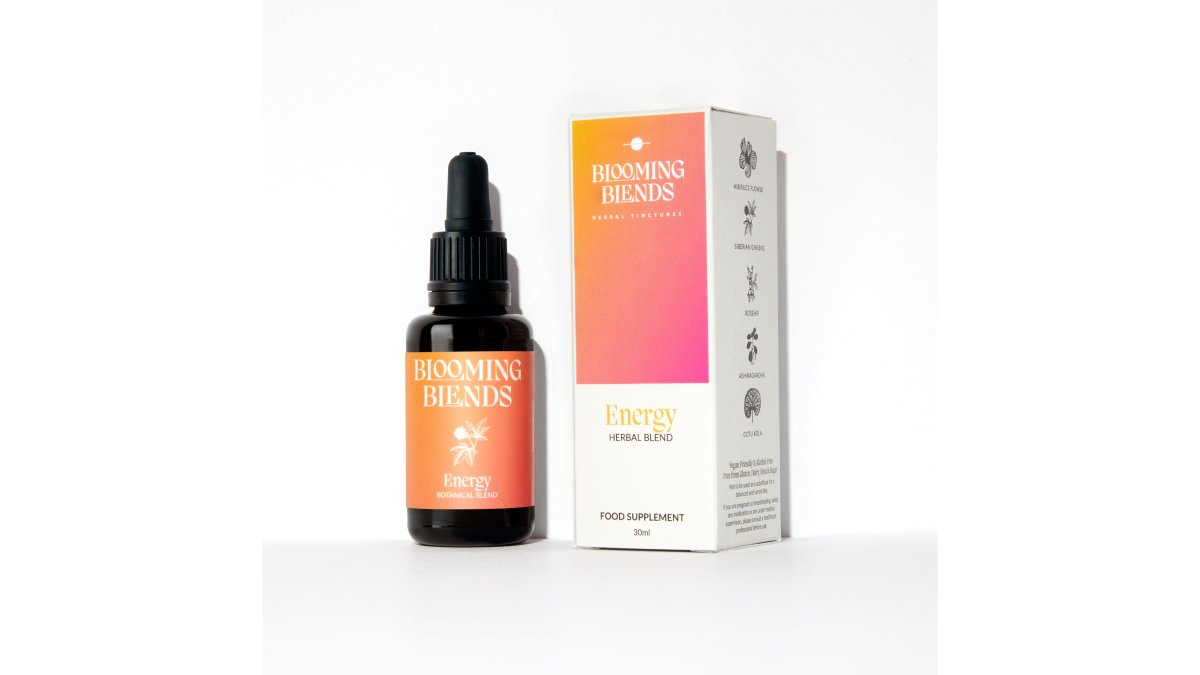
Our ENERGY tincture is caffeine-free and alcohol-free, blending ashwagandha, rose hip, Siberian ginseng, gotu kola and hibiscus into smooth drops for early starts and busy afternoons. You can shop the ENERGY tincture and see the full ingredient list.

Best for: busy adults who want caffeine-free daytime support without tablets. Skip if: you have persistent fatigue that needs medical investigation first.
Frequently Asked Questions
Ca herbal tinctures help with daytime fatigue?
They can support energy levels, but the evidence is ingredient-specific. Supplement research on rhodiola and ashwagandha is promising, but it was not conducted on tinctures, so treat tinctures as gentle support alongside sleep, food and movement rather than a guaranteed fix.
Are alcohol-free herbal tinctures as effective as alcohol-based ones?
There is no head-to-head clinical evidence in the research comparing the two. Alcohol-free tinctures use glycerine instead, which suits anyone avoiding alcohol for medication, pregnancy or personal reasons. What matters more is the herb, the amount of liquid extract per serving and how consistently you take it. Check the label for the herb species and serving size rather than assuming one base is stronger.
When should I speak to a GP about persistent fatigue?
Book an appointment if tiredness lasts more than a few weeks, wakes you at night, or comes with weight change, breathlessness, low mood or heavy periods. Persistent fatigue can stem from iron deficiency, thyroid problems, sleep apnoea or stress, and these need proper assessment. A tincture will not correct an underlying cause, so get checked before spending on supplements.
How long does a natural energy tincture take to work?
Give it two to four weeks of consistent daily use before judging it. Results from herbal supplements are usually assessed over several weeks, so short trials of a few days rarely tell you much. Take it at the same time each day, note your energy in the mid-afternoon, and stop if you notice side effects. Ginseng may affect blood pressure and interact with some medicines, so check with a pharmacist if you take prescription medication.
Tiredness that arrives every afternoon is worth addressing properly, with a routine that supports your energy and a tincture you trust. Blooming Blends makes award-winning, alcohol-free tinctures in small batches, with no fillers or binders, easy to adjust to your routine. Get started with Blooming Blends and find a daily ritual that fits your day.