7 Natural Remedies for Menopause Sleep That Actually Help
Last Updated: October 26, 2026
Quick Summary
Natural remedies for menopause sleep target the cause of each wake-up: isoflavones from soy and red clover are the most studied nutritional option, while breathable bedding and a cool bedroom reduce night sweats. Magnesium-rich foods and black cohosh may help, but evidence varies, so discuss herbs with your GP first.
- Menopause sleep problems split into falling asleep, staying asleep and waking too early, each needing its own fix.
- A 2023 review found 37 studies where an intervention improved sleep and 22 where it made no difference.
- Keep a spare set of bedding within reach so night sweats never mean hunting at 3am.
- Start one supplement at a time, give it six to eight weeks, and stop if nothing changes.
- Her Harmony is an alcohol-free tincture of six botanicals, priced at £26.00.
Table of Contents
- Why Menopause Sleep Problems Happen
- Night Sweats and Sleep: Breaking the Wake-Up Cycle
- Herbal Remedies for Menopause: What the Evidence Says
- Isoflavones and Soy: The Most Studied Nutritional Option
- Sleep Hygiene for Menopause: Small Changes That Matter
- Magnesium, Black Cohosh and Other Supplements: A Cautious Approach
- Building a Bedtime Routine with Her Harmony Tincture
- Frequently Asked Questions
Why Menopause Sleep Problems Happen
Sleep disruption is one of the most common menopause symptoms, and it rarely has a single cause. Falling oestrogen and progesterone affect the body's temperature control and sleep architecture at the same time, so nights become lighter and easier to break.
The NHS overview of menopause symptoms lists sleep problems and night sweats among the main symptoms to expect. Here is what most guides get wrong: they treat poor sleep as one problem. In practice, menopause sleep problems split into three separate issues, and each needs its own fix:
- Falling asleep (stress and a busy mind)
- Staying asleep (night sweats and temperature swings)
- Waking too early (light sleep and low melatonin)
Below, we break down natural remedies for menopause sleep that target each one, and what the evidence actually says about them.
Night Sweats and Sleep: Breaking the Wake-Up Cycle
Night sweats and sleep are locked in a loop: a hot flush wakes you, the waking raises your stress, and stress makes the next flush more likely. Breaking that loop matters more than chasing a single cure.
The Menopause Charity recommends breathable sleepwear and bedding, a cool bedroom, and avoiding potential bedtime triggers such as spicy foods. Small adjustments, but they cut the number of wake-ups.
If you wake soaked, change clothes and bedding without switching on bright lights. Keep a spare set within reach so you never have to hunt for one at 3am.
For night-time waking, a calming product can help you settle back down without screens or stimulation. Browse the Rest Calm collection for calming products.
Herbal Remedies for Menopause: What the Evidence Says
Herbal remedies for menopause are popular, but the evidence behind them varies widely. Some herbs have real research behind them. Others have tradition, which is not the same thing.
The NHS guidance on herbal remedies for menopause is clear on two points: evidence varies between products, and some herbs can interact with medicines. It advises discussing them with a healthcare professional first. That is not a reason to avoid herbs. It is a reason to be honest with your GP about what you are taking.
What most guides miss is that dose and preparation change everything. For more depth, see this practical guide to herbal tinctures for menopause sleep. A weak tea and a concentrated tincture are not the same intervention.
The evidence behind each option varies, so here is how the main herbal and nutritional remedies compare.
| Option | Best for | Key difference |
|---|---|---|
| Isoflavones | Most studied nutritional option | Weakly mimic oestrogen in the body |
| Soy foods | Daily, consistent intake | Tofu, edamame and soy milk |
| Red clover | Isoflavone intake | Usually taken as a supplement |
| Black cohosh | Promising in the 2023 review | Carries a rare liver risk |
| Magnesium | Sleep support | Found in leafy greens, nuts and seeds |
| Herbal products generally | Personal trial | Dose and preparation change everything |
Isoflavones and Soy: The Most Studied Nutritional Option
Isoflavones are plant compounds found in soy and red clover that weakly mimic oestrogen in the body. They are the most researched nutritional option for menopause sleep, which makes them the sensible starting point.
A 2023 review of nutritional interventions for menopause-related sleep found 37 studies where an intervention improved some aspect of sleep, and 22 where it made no difference. Mixed results, honestly reported.
The same review flagged isoflavones, soy-based interventions and black cohosh as the most promising options, while calling for larger, higher-quality studies. Read that carefully: promising is not proven.
- Soy foods: tofu, edamame, soy milk, daily and consistent
- Red clover: usually taken as a supplement
- Timing: benefits build over weeks, not nights
Sleep Hygiene for Menopause: Small Changes That Matter
Sleep hygiene for menopause works best when it targets temperature and light, the two things hormones disrupt most. Generic advice about "winding down" misses the point.

Try these, in this order:
- Keep the bedroom cool and wear breathable cotton
- Take a warm shower an hour before bed, so your body cools afterwards
- Dim the lights from 9pm and put screens away
- Cut alcohol and spicy food in the evening
- Keep a consistent wake time, even after a bad night
A fixed evening routine does more than any single tip. Try this evening wind-down ritual for when the clocks go back as a concrete routine.
Magnesium, Black Cohosh and Other Supplements: A Cautious Approach
Supplements can help, but they deserve caution rather than hype. Magnesium is often recommended for sleep and is found in foods such as leafy greens, nuts and seeds. The Menopause Charity discusses both magnesium-rich foods and supplements.
Black cohosh appears among the most promising options in that 2023 review. It also carries a rare liver risk, so anyone with liver problems should speak to a GP before trying it.
The honest position: supplements are worth a careful trial, not a blind purchase. Start one at a time, give it six to eight weeks, and stop if nothing changes.
If you choose a liquid herbal product, take it consistently and at the same time each day. Our guide on how to take herbal tinctures daily explains the practicalities.
Building a Bedtime Routine with Her Harmony Tincture
A bedtime routine works when it is short enough to keep.
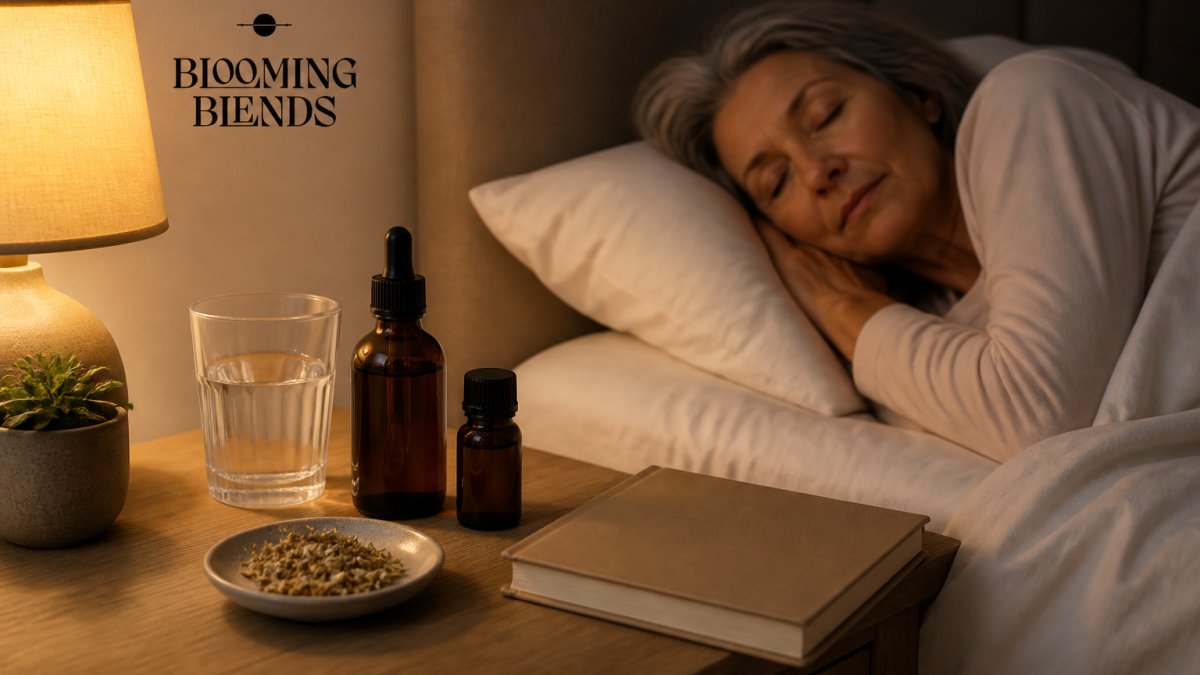
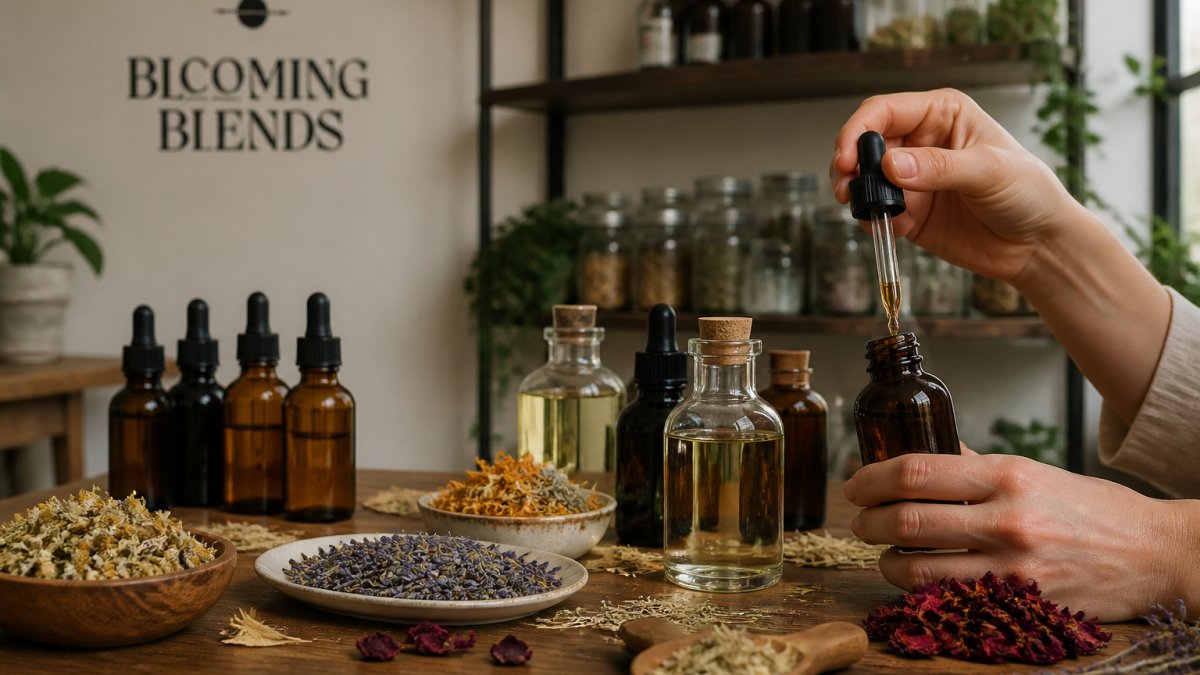
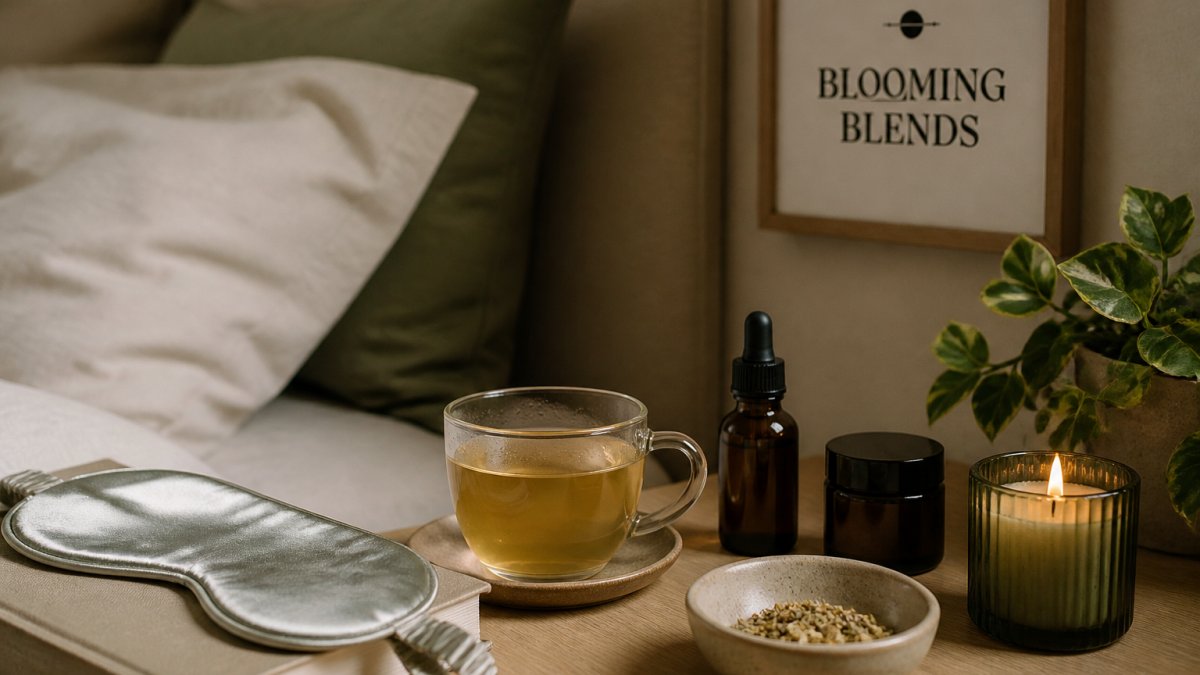
Her Harmony is an alcohol-free herbal tincture that brings together six botanicals in one blend. It is made in small batches, with no tablets, fillers or binders, and finished with naturally sweet glycerine made from UK-grown rapeseed. This gentle approach to evening restoration pairs well with the soothing properties of herbal tea blends that encourage a calm transition into sleep.
You can shop Her Harmony at £26.00 and add it to your evening routine tonight. Easy-to-take drops, simple to adjust to your own rhythm.

Best for: women who want a plant-based evening ritual without alcohol or tablets. Skip if: you are pregnant, breastfeeding, or taking medication without checking with your GP first.
Frequently Asked Questions
What natural remedies may help with menopause-related sleep problems?
A 2023 review of nutritional interventions found mixed results: 37 studies reported improvement in some aspect of sleep, while 22 found no benefit. Isoflavones, soy-based interventions and black cohosh were among the most promising. The review calls for higher-quality studies. Practical steps include keeping your bedroom cool, wearing breathable sleepwear and trying alcohol-free herbal tinctures such as Her Harmony as part of a consistent bedtime routine.
Can magnesium help with menopause sleep problems?
The Menopause Charity discusses magnesium-rich foods and magnesium supplements as part of its sleep guidance, but the evidence is not conclusive. Magnesium may support relaxation, yet it is not a guaranteed fix for night sweats or hormonal sleep disruption. If you take medication or have kidney problems, speak to a GP or pharmacist before adding a supplement. A food-first approach, such as leafy greens, nuts and seeds, is a sensible starting point.
Are herbal remedies for menopause sleep safe to take?
The NHS advises that evidence for herbal remedies varies and that some products can interact with medicines, so discuss their use with a healthcare professional. Choose alcohol-free options if you avoid alcohol for medical or personal reasons. Blooming Blends tinctures are alcohol-free, made in small batches with no tablets, fillers or binders, and finished with naturally sweet glycerine from UK-grown rapeseed. Always check the label and start with a small dose.
When should I speak to a GP about sleep problems during menopause?
Speak to a GP if sleep problems persist for several weeks, affect your daily functioning, or come with low mood, anxiety or palpitations. The NHS recommends discussing herbal remedies with a healthcare professional because of possible interactions. A GP can assess whether symptoms are menopause-related or point to another cause such as sleep apnoea. Keep a simple sleep diary to share at your appointment.
Menopause sleep problems rarely fix themselves overnight, and no single remedy does all the work. A cooler bedroom, a consistent routine and one well-chosen herbal support together do more than any of them alone.
At Blooming Blends, our award-winning tinctures are alcohol-free, made in small batches, and designed to slot into a busy day. Start with Her Harmony and build a small ritual of care around your own rhythm.
Get started with Blooming Blends and give your evenings back to rest.