Herbal Tinctures for Menopause Sleep: A Practical Guide
Last Updated: October 25, 2026
Quick Summary
Herbal tinctures for menopause sleep are a supporting evening ritual, not a replacement for medical care. Start with the dose on the label, take it 30 to 60 minutes before bed, and keep it consistent for two to four weeks before judging results.
- Around three in four women report sleep disruption during perimenopause and menopause.
- A review found three of four black cohosh studies showed benefit, including sleep quality.
- Check for interactions with prescribed medication, including HRT and antidepressants, before starting.
- Keep the bedroom cool and cut evening alcohol and caffeine to reduce night waking.
- Choose small-batch tinctures with a transparent ingredient list and no fillers or binders.
Table of Contents
- Why Menopause Sleep Problems Happen and Where Tinctures Fit
- What Herbal Tinctures Are and How to Take Them
- Herbs for Menopause Symptoms: What the Research Says About Sleep
- Dosage and Daily Routine for Herbal Tinctures
- Menopause Supplements and Safety: What to Check First
- Sleep Tips for Perimenopause to Use Alongside Tinctures
- Choosing a Quality Alcohol-Free Tincture
- Building Your Evening Wind-Down with Her Harmony
- Frequently Asked Questions
Why Menopause Sleep Problems Happen and Where Tinctures Fit
Around three in four women report sleep disruption during perimenopause and menopause, and the hormonal shifts behind it are not something willpower can fix. Falling oestrogen and progesterone disturb the body's temperature regulation and melatonin rhythm, so you get night sweats, 3am wake-ups, and a wired-but-tired feeling that no amount of counting sheep touches. This guide from Blooming Blends walks through what herbal tinctures for menopause sleep can realistically do, what the evidence actually supports, and how to use them safely alongside whatever else you are taking.
Here is the honest framing most guides skip: herbal tinctures for menopause sleep are a supporting ritual, not a replacement for medical care. The NHS lists herbs sometimes taken for menopause symptoms, including black cohosh, ginseng and red clover, but does not endorse them as proven sleep treatments (NHS guidance on menopause symptoms and treatments). Used sensibly, though, a well-made tincture can slot into an evening routine that genuinely helps.
What Herbal Tinctures Are and How to Take Them
A herbal tincture is a concentrated liquid extract made by steeping plant material in a solvent, traditionally alcohol, so the plant's compounds transfer into a stable, dropper-friendly form. Alcohol-free versions use glycerine instead, which makes them suitable for people avoiding alcohol.
Taking one is simple: measure the stated number of drops into water or under the tongue, usually once or twice daily. If you want the fuller picture before committing, read what tinctures are or our guide to taking herbal tinctures daily. Watch out: taking a tincture at the same time as prescribed sleep medication without checking with a pharmacist is a common and avoidable mistake.
Herbs for Menopause Symptoms: What the Research Says About Sleep
The evidence base for herbs for menopause symptoms is real but uneven, and sleep specifically is studied far less than hot flushes. Here is what the research actually shows.
| Herb | Research finding | Evidence strength |
|---|---|---|
| Black cohosh | Three of four studies found benefit, including sleep quality | Moderate |
| Fennel and valerian | Relieved sleep disorders, reduced hot flush severity | Single study |
| Red clover | Attenuating effect on sleep quality | Review-level |
| Lemon balm | Traditional use for sleep and nervous tension | Traditional |
Black Cohosh
A review in Nutrients reported that three of the four black cohosh studies it examined found beneficial effects on menopausal symptoms, including sleep quality. That is a promising signal, not a guarantee, and the review did not report participant numbers.
Fennel and Valerian
Researchers reporting in the Journal of Menopausal Medicine found that a fennel-valerian extract relieved sleep disorders and reduced the severity and frequency of hot flushes. No numerical effect size was published, so treat this as encouraging rather than definitive.
Red Clover, Lemon Balm and Pine Bark
A 2018 systematic review and meta-analysis on herbal medicines and sleep in menopausal women found attenuating effects on sleep for red clover, lavender combined with bitter orange, and pine bark extract. Separately, a review of herbal medicines for menopausal symptoms describes lemon balm as used for nervous tension and sleep problems, particularly in menopause.
Dosage and Daily Routine for Herbal Tinctures
Start with the dose on the label and keep it consistent for two to four weeks before judging results. A practical daily pattern looks like this:
- Evening, 30-60 minutes before bed: one dose in a small glass of water
- Same time nightly: consistency matters more than timing precision
- Log it: note sleep quality for a fortnight so you are judging evidence, not mood
More is not better. Doubling the dose because the first week felt flat is the fastest way to waste a bottle.
Menopause Supplements and Safety: What to Check First
Safety comes before enthusiasm. Menopause supplements and safety checks matter more than most labels admit, because herbal products are not automatically gentle simply for being plant-based.
- Check for interactions with any prescribed medication, including HRT and antidepressants
- Confirm the product is alcohol-free if you avoid alcohol for medical or personal reasons
- Look for a full ingredient list with quantities, not a vague "herbal blend"
- Speak to your GP or pharmacist if you have a liver condition or take blood thinners
- Stop and seek advice if you notice any adverse reaction
St John's wort is a particular flag: the NHS notes it can interact with other medicines, so never combine it with prescribed treatment without professional advice.
Sleep Tips for Perimenopause to Use Alongside Tinctures
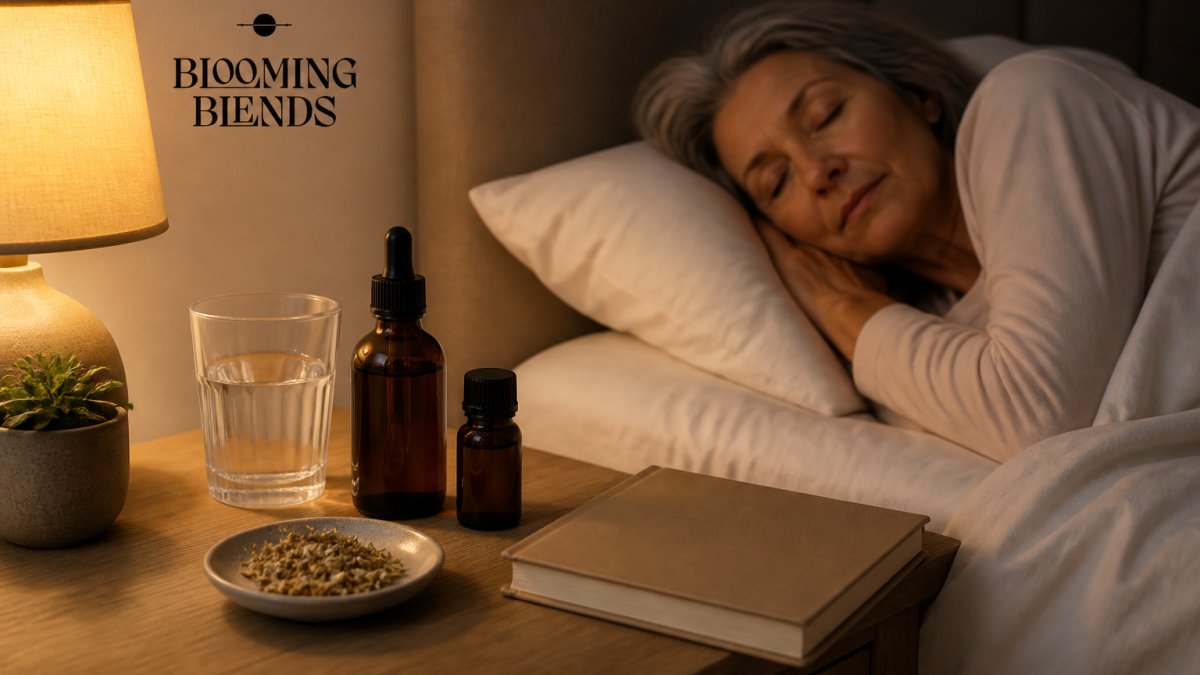
Tinctures work best when the basics are in place. Keep the bedroom cool, layer bedding so you can shed a layer after a flush, and cut alcohol and caffeine in the evening, both of which worsen night waking. A consistent wind-down helps more than most people expect; our evening wind-down ritual gives you a concrete routine to follow, and a night-time tincture can sit at the centre of it.
Choosing a Quality Alcohol-Free Tincture
Quality is where cheap tinctures fall apart. Look for small-batch production, a transparent ingredient list with quantities, glycerine rather than alcohol if you are avoiding drink, and no fillers or binders. Our own tinctures are alcohol-free, made in small batches, and finished with naturally sweet glycerine from UK-grown rapeseed, with no tablets or fillers involved.
Building Your Evening Wind-Down with Her Harmony
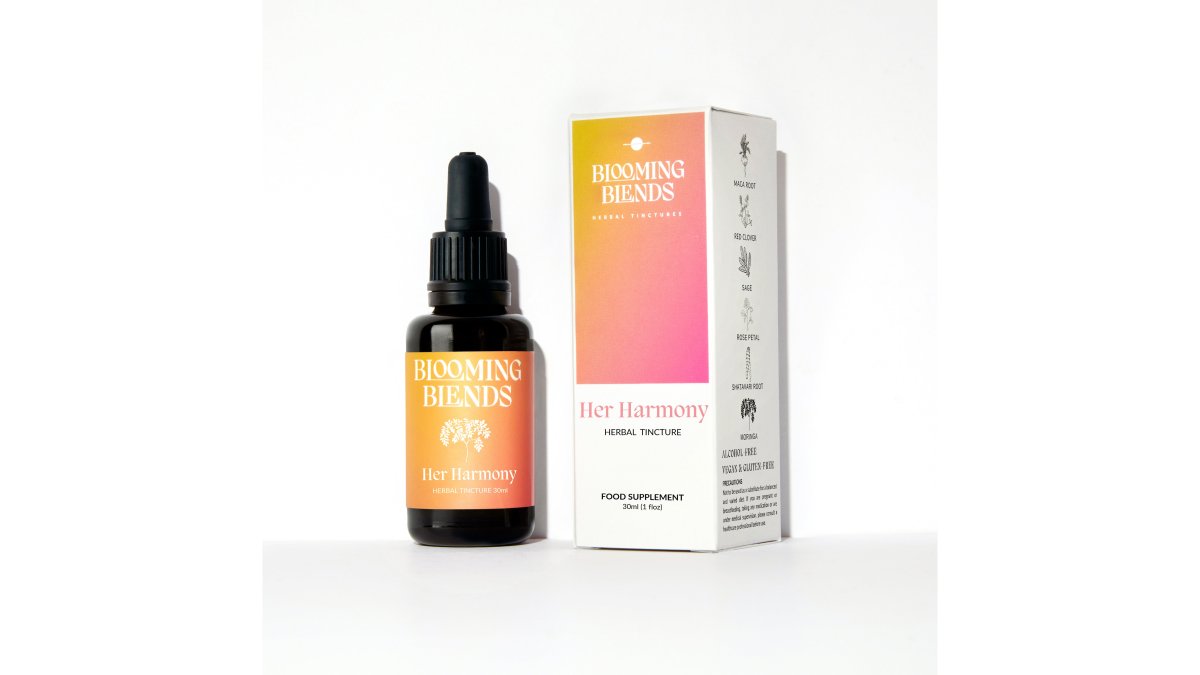
Her Harmony brings six thoughtfully selected botanicals together in one smooth, alcohol-free tincture, designed as a small daily ritual of care through changing chapters. At £26.00, it is the simplest way to put the guidance above into practice, and you can see the Her Harmony tincture and its full ingredient list before you decide.

Frequently Asked Questions
Can herbal tinctures help with sleep problems during menopause?
Some evidence points that way. A 2018 systematic review and meta-analysis found that certain herbal medicines, including red clover, lavender combined with bitter orange, and pine bark extract, had attenuating effects on sleep in menopausal women. A 2023 study reported that a fennel-valerian extract relieved sleep disorders and reduced hot flush severity and frequency. Tinctures are simply a liquid way to take these herbs, so the research is about the herbs themselves rather than the format. Results vary between people, and tinctures sit alongside, not instead of, medical advice.
Which herbs are commonly used for menopause sleep problems?
The research supplied here covers black cohosh, fennel with valerian, red clover, lemon balm, lavender with bitter orange, and pine bark extract. A 2026 review in Nutrients reported that three of the four black cohosh studies it examined found beneficial effects on menopausal symptoms, including sleep quality. Lemon balm appears in a 2017 review as a herb used for sleep problems, particularly in menopause. The NHS also lists black cohosh, red clover, ginseng and St John's wort among herbs sometimes taken for menopause symptoms, though it does not endorse them as sleep treatments.
Are herbal tinctures safe to take during menopause?
Not automatically. The NHS position is that herbal remedies should not be assumed to be proven or suitable treatments for menopause symptoms, so treat them as complementary rather than a substitute for medical care. Check the label for a clear ingredient list and strength, buy from a supplier who can tell you where the herbs come from, and speak to a pharmacist or GP before starting, especially if you take any prescription medicine. Alcohol-free options suit people who have been advised to avoid alcohol, including for medication reasons.
Can herbal remedies interact with medicines or hormone replacement therapy?
Yes, interactions are possible, which is why a conversation with a pharmacist or GP matters before you start. St John's wort is a well-known example of a herb that can affect how other medicines work, and the NHS lists it among herbs sometimes taken for menopause symptoms. If you are on HRT or any regular prescription, tell your clinician exactly which herbs you plan to take and at what strength. Keep a note of what you use and how much, so any reaction can be traced quickly.
What can I try if night sweats are disrupting my sleep?
Start with the basics: a cooler bedroom, breathable bedding and light layers you can remove during the night. The 2023 fennel-valerian study reported reductions in both the severity and frequency of hot flushes alongside better sleep, so a herbal option is reasonable to discuss with your GP or pharmacist. Keep a simple diary of when night sweats wake you, since patterns help a clinician decide whether HRT or another treatment is worth considering. If sweats are frequent and exhausting, book an appointment rather than self-treating indefinitely.
When should I speak to a GP about menopause-related sleep problems?
Book an appointment if poor sleep has lasted weeks, is affecting your work or mood, or comes with frequent night sweats. The NHS advises that herbal remedies should not be assumed to be suitable treatments for menopause symptoms, so a GP can review your options properly, including HRT. Speak to them sooner if you take prescription medication, have a long-term condition, or notice symptoms that worry you. Bring a note of any herbs or supplements you already take so the conversation starts from an accurate picture.
Sleep through perimenopause is rarely solved by one bottle, but a consistent evening ritual with a well-made, alcohol-free tincture gives you something concrete to build around. Blooming Blends makes small-batch tinctures with no fillers, no tablets and no alcohol, easy to adjust to your own routine. Get started with Blooming Blends and give your evenings a calmer, more restful rhythm.