How to Store Herbal Tinctures After Opening
Last Updated: November 4, 2026
Quick Summary
Store herbal tinctures after opening with the lid screwed fully shut, upright, in a cool, dark cupboard away from heat and direct sunlight. Whether your bottle needs the fridge depends on what it is made with, so always follow the label for your specific product.
- Glycerine-based and vinegar tinctures are often chilled after opening, while high-alcohol tinctures usually keep in a cool, dark cupboard.
- Stand bottles upright rather than on their side to avoid leaks around the seal.
- Keep the dropper clean and dry, and never let it touch surfaces or your fingers.
- Avoid the fridge door, where temperature swings can affect an opened bottle.
- If a bottle looks or smells unusual, follow the label and ask us rather than judging safety by appearance alone.
Table of Contents
- How to Store Herbal Tinctures After Opening: The Basics
- Do Herbal Tinctures Need to Be Refrigerated?
- How to Store Alcohol-Free Tinctures
- A Gentle Next Step
- Frequently Asked Questions
How to Store Herbal Tinctures After Opening: The Basics
Storing herbal tinctures after opening comes down to four things: keep the bottle tightly closed, out of direct sunlight, away from heat, and somewhere you'll remember to check the label.
At Blooming Blends, we make alcohol-free herbal tinctures, so storage questions come up often.
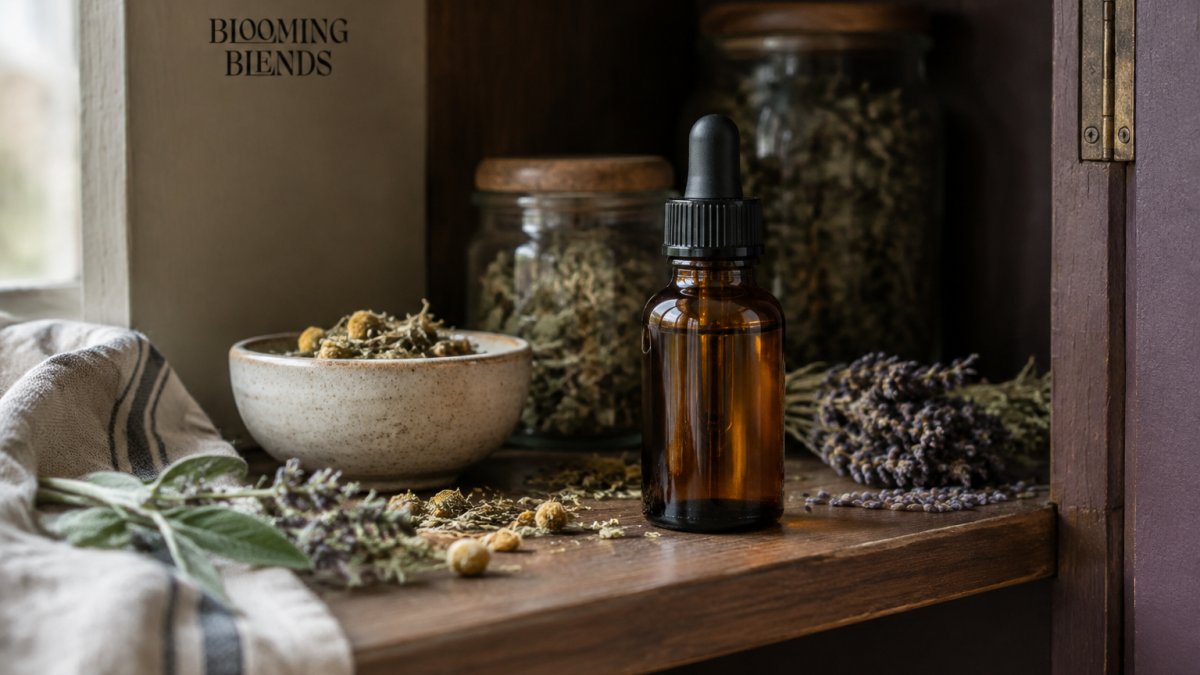
- Close it properly. Screw the lid down fully every time.
- Keep it dark and cool. A cupboard beats a windowsill, the hob or a radiator.
- Stand it upright. A bottle on its side invites leaks around the seal.
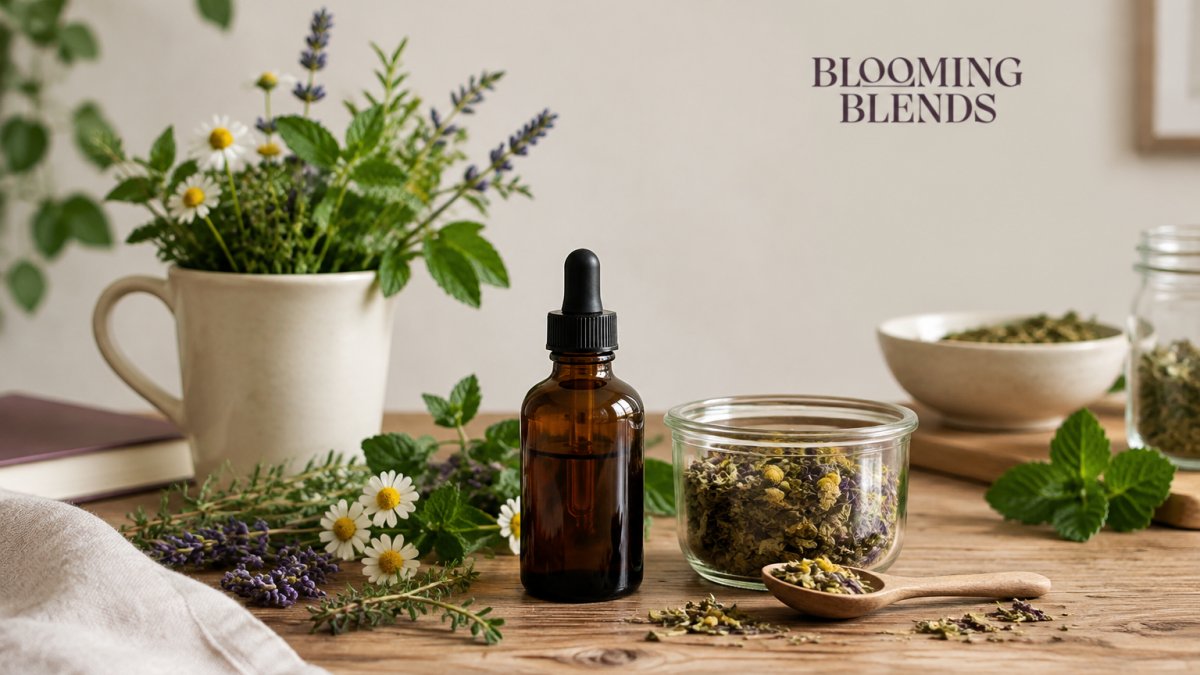
A herbal tincture is a liquid herbal extract made by steeping plant material in a solvent, usually alcohol, glycerine or vinegar, and which one your bottle uses shapes how it should be kept.
If you're still working out how to fit drops into your day, our guide on how to take herbal tinctures daily covers dosage, timing and mixing.
Do Herbal Tinctures Need to Be Refrigerated?
Not always. Whether a herbal tincture needs the fridge depends on what it's made with, and the label is the only reliable answer for your specific bottle.
Advice online splits in two: some sources suggest refrigerating glycerites, vinegar tinctures and low-alcohol products after opening, while others say a tincture made with enough alcohol needs no refrigeration. Both can be right, because they're describing different products.
Here's a simple way to think about it:
| Tincture type | Common storage advice | Why |
|---|---|---|
| High-alcohol tincture | Cool, dark cupboard | Alcohol helps preserve the extract |
| Glycerine-based, alcohol-free | Often chilled after opening | Glycerine offers less preservation |
| Vinegar tincture or oxymel | Often chilled after opening | Lower preservation than alcohol |
| Low-alcohol blend | Check the label | Falls between the two camps |
Glycerite simply means a herbal extract made with glycerine instead of alcohol. Ours fall into that group, which is why we point people to the bottle rather than a blanket rule.
A study in the Journal of AOAC International on traditional tincture quality looked at how tincture samples held up over three months in different storage conditions. It's a useful reminder that storage genuinely affects a preparation, even where the detail varies by product.
Reset Box - Herbal Travel Essentials →
How to Store Alcohol-Free Tinctures
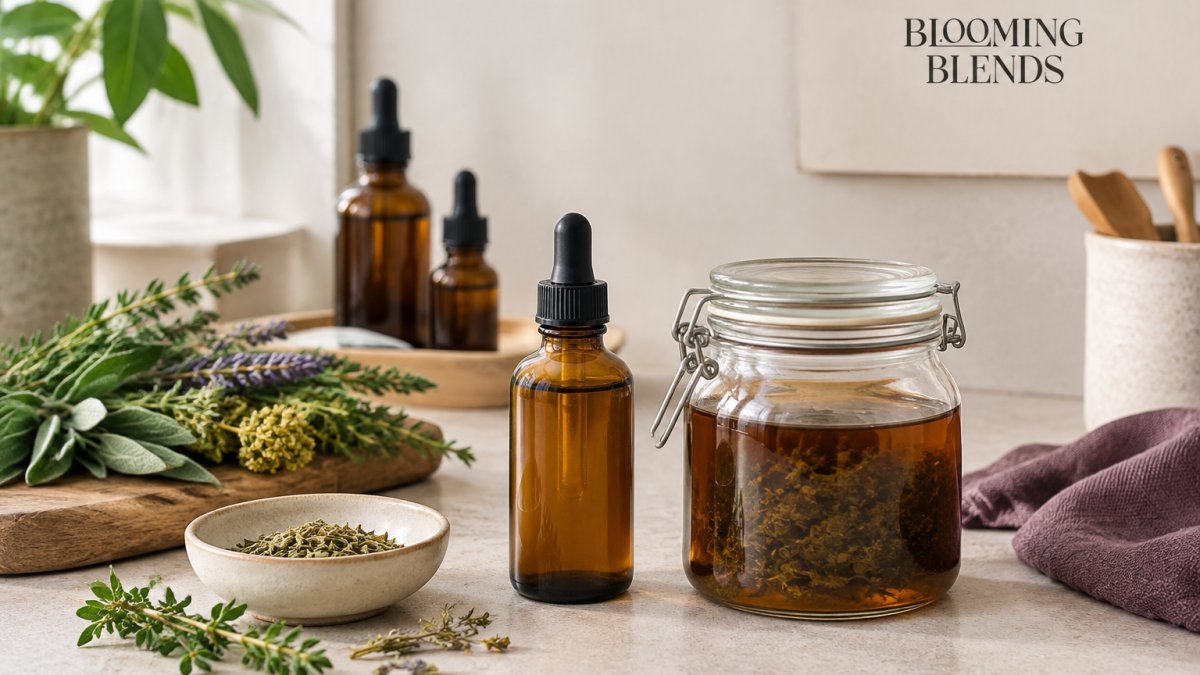
Alcohol-free tinctures usually want more care than alcohol-based ones, not less. Glycerine doesn't preserve a blend the way a strong alcohol solution does, so light, heat and air matter more.
You can read more about the herbs we use.
Our checklist for an opened bottle:
- Store upright in a cool, dark cupboard
- Keep the lid screwed fully shut between uses
- Keep the dropper clean and dry, and don't let it touch surfaces
- Avoid the fridge door, where temperature swings
- Check the label for any product-specific storage instruction
Watch out: don't put the dropper down on the counter or touch it with your fingers. That's the easiest way to introduce something the blend doesn't need.
We won't give you a fixed number of months for an opened bottle, because it varies by product. If your bottle's instructions aren't clear, contact us and we'll point you to the right information.
If a bottle looks or smells unusual, that alone doesn't tell you whether it's safe to use. Follow the label, and ask us if you're unsure.
A Gentle Next Step
Keeping your tinctures well is a small habit that protects what's inside. If you're ready to choose a blend, browse our alcohol-free herbal tinctures and find the one that fits your day, whether that's rest, calm or digestion.
Frequently Asked Questions
Do herbal tinctures need to be refrigerated after opening?
Not always. Guidance varies: some sources recommend refrigeration after opening for glycerites, vinegar tinctures and low-alcohol products, while others say tinctures with enough alcohol do not need it. Because alcohol-free and glycerine-based blends differ from alcohol-based ones, check your bottle's label first. If the label gives no storage instructions, contact the maker before deciding. For Blooming Blends products, follow the directions on the bottle or get in touch with us directly rather than assuming.
How long do herbal tinctures last once opened?
There is no single answer, and an unopened shelf life is not the same as how long a bottle lasts after opening. Shelf life depends on the solvent, the alcohol percentage, the herbs used and how the bottle is stored. The most reliable figure is the one on your product's label or from the maker. Record the date you opened the bottle so you can keep track, and follow the label's guidance rather than guessing from the smell or colour alone.
What should I do if the label does not give storage instructions?
Ask the maker. A short email to the brand is the quickest way to get an answer specific to that product, since formulations and packaging change. In the meantime, keep the bottle upright with the lid tightly closed, away from direct sunlight and heat, in a cool, dark place. Do not assume appearance or aroma alone can tell you whether a product is safe to use.
Storing herbal tinctures well takes seconds, not a system. Get the bottle closed, keep it dark and cool, and follow the label. Get started with Blooming Blends and give your blends the best chance of staying as they should.


Written by Fleur Sladen