Are Alcohol-Free Tinctures for Anxiety Effective?
Last Updated: 30 October 2026
Quick Summary
Alcohol-free tinctures are concentrated herbal extracts made with glycerine or vinegar instead of ethanol, giving you the same convenience without the alcohol. Herbs such as lemon balm, chamomile, passionflower and valerian are traditional choices for calming blends. Quality of herb and care in making matter more than the solvent used.
- Glycerine suits most people, while vinegar-based tinctures taste sharp but work too.
- Confirm a tincture is genuinely alcohol-free, not merely low alcohol.
- Match the herb to the time of day: lemon balm for work, valerian for night.
- Add drops to water or tea in the morning, mid-afternoon and 30-60 minutes before bed.
- Speak to your GP or pharmacist before starting a tincture if you take prescription medication.
Table of Contents
- What an Alcohol-Free Tincture Actually Is
- Herbal Remedies for Anxiety: Which Herbs Do the Work
- How to Choose the Right Alcohol-Free Tincture for Anxiety
- How to Take Herbal Tinctures Without Disrupting Your Day
- Herbal Tincture Side Effects and Who Should Be Careful
- Do Alcohol-Free Tinctures Work as Well as Alcoholic Ones?
- Build Your Own Calm Routine with Blooming Blends
- Frequently Asked Questions
What an Alcohol-Free Tincture Actually Is
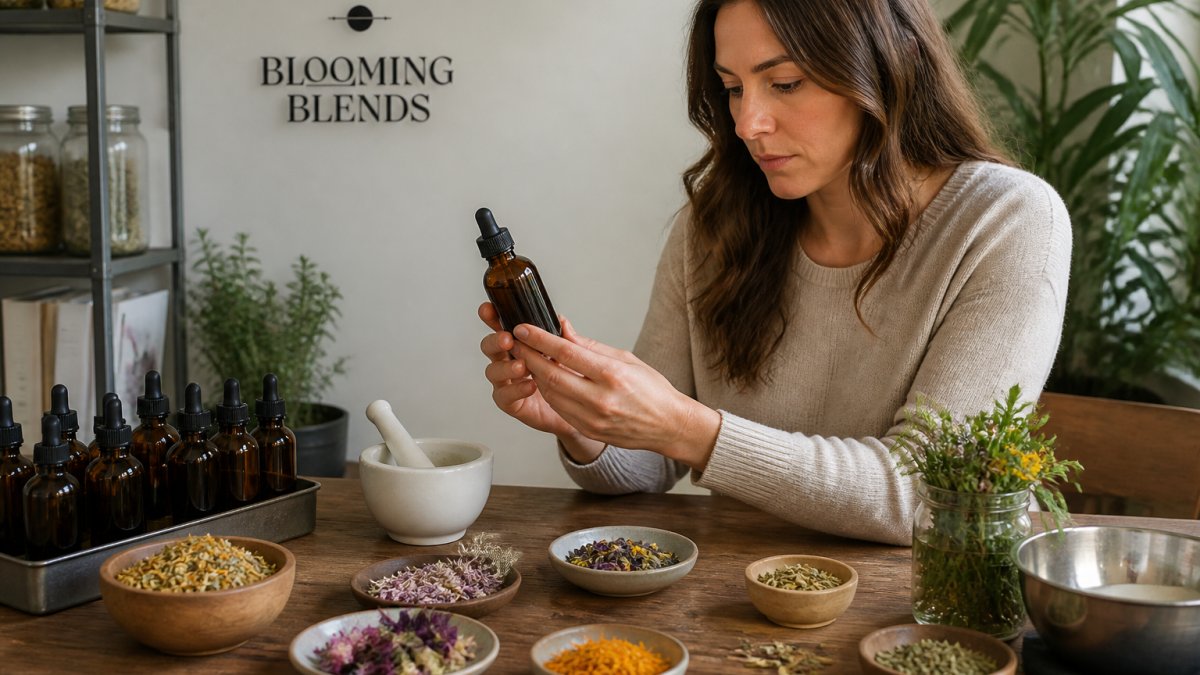
Alcohol-free tinctures are concentrated herbal extracts made without ethanol. Instead of steeping herbs in alcohol, makers use glycerine or vinegar to draw out the plant's compounds. The result is a liquid you drop into water, tea or juice.
That distinction matters more than most people realise. If you avoid alcohol for medical, religious or personal reasons, a standard tincture is off the table. An alcohol free tincture for anxiety gives you the same convenience without the ethanol.
Blooming Blends finishes its tinctures with naturally sweet glycerine made from UK-grown rapeseed. No tablets, no fillers, no binders. Just drops.
The format is simple: a small bottle, a dropper, and a routine that takes seconds. That ease is exactly why so many people reach for tinctures over capsules.
Herbal Remedies for Anxiety: Which Herbs Do the Work
Not every calming herb works the same way. Some settle the mind. Others relax the body. A few do both. Knowing the difference helps you pick a blend that matches your day.
Lemon Balm, Chamomile and Passionflower
These three are the backbone of most calming blends. A review of tincture uses and benefits notes that lemon balm may help relieve anxiety and improve mood.
- Lemon balm: gentle, citrus-scented
- Chamomile: familiar and mild
- Passionflower: a traditional herb with a long history of use
Each works differently. Together they cover more ground than any single herb.
Why the Alcohol-Free Valerian Tincture Deserves Its Own Look
Valerian is a strong, earthy herb. Many people find the smell off-putting.
Valerian is also available in alcohol-free form for those who prefer to avoid ethanol.
If you'd rather start with a ready-made blend, our CALM Organic Tincture is available in an alcohol-free format.
How to Choose the Right Alcohol-Free Tincture for Anxiety
Start with three questions: what do you need it for, when will you take it, and what can't you have in it?
Answer those honestly and the shortlist gets small fast.
- Check the base. Glycerine suits most people. Vinegar-based tinctures taste sharp but work too.
- Read the herb list. Fewer, well-chosen herbs beat a long, vague list.
- Look for organic certification. It tells you something about how the plants were grown.
- Confirm it's genuinely alcohol-free. Not "low alcohol." None.
- Match the herb to the time of day. Lemon balm for work, valerian for night.
- Start with one blend. Changing three things at once tells you nothing.
A common mistake is buying the strongest-sounding bottle. Potency isn't the same as suitability. A mild herb taken daily often beats a strong one taken rarely.
How to Take Herbal Tinctures Without Disrupting Your Day
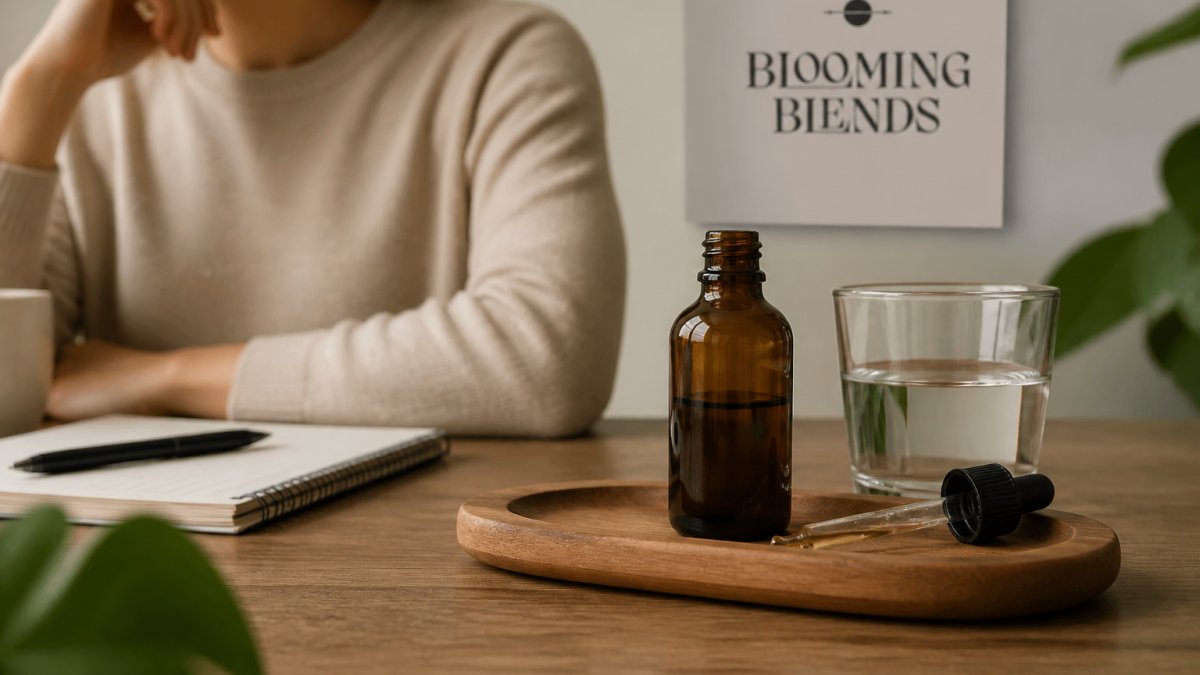
The simplest method: drop the dose into a small glass of water, stir, and drink. It takes under a minute. No pills to swallow, no water bottle required.
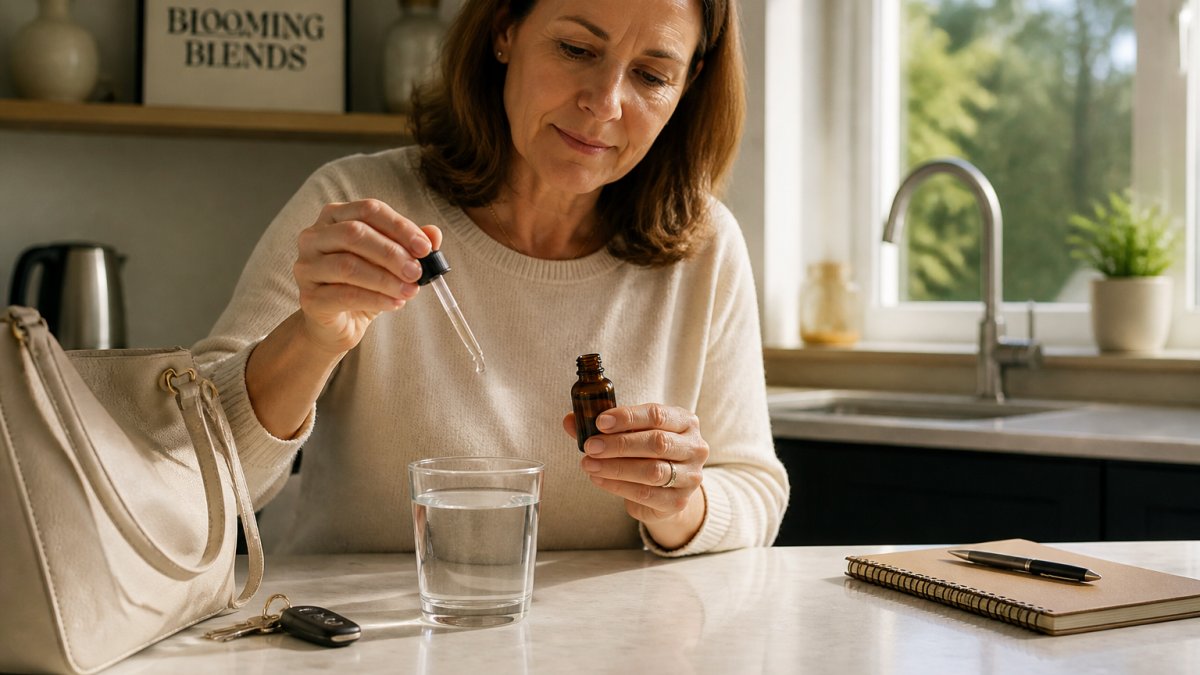
Timing matters as much as dose. Here's how we'd build it into a normal working day:
| When | What to do | Why it helps |
|---|---|---|
| Morning | Drops in water with breakfast | Sets a calm tone before email |
| Mid-afternoon | Drops in tea | Covers the post-lunch dip |
| Evening | Drops 30-60 minutes before bed | Supports wind-down |
Keep the bottle where you'll see it. A desk drawer beats a cupboard. If you commute, the bottle travels easily.
For a fuller walkthrough, read our guide on how to take herbal tinctures daily. If you want specifics on amounts, our herbal tincture dosage article covers it in detail.
Herbal Tincture Side Effects and Who Should Be Careful
Most people tolerate herbal tinctures well. That doesn't mean they're risk-free. Herbs are active, and active means they can interact with other things.
Possible issues with herbal products include digestive upset, drowsiness and allergic reactions to specific plants.
Watch out: if you take prescription medication, speak to your GP or pharmacist before starting any herbal tincture. Sedating herbs can compound the effects of sleep aids, and some herbs affect how the body processes certain drugs.
Avoid valerian before driving or operating machinery. Pregnant and breastfeeding women should check with a healthcare professional first. The same goes for anyone due to have surgery.
Do Alcohol-Free Tinctures Work as Well as Alcoholic Ones?
This is the question we get most often, and it deserves a straight answer. Alcohol is an excellent solvent. It pulls certain plant compounds out efficiently, which is why traditional tinctures use it.
Glycerine extracts differently from alcohol and is gentler and sweeter in taste.
So is there a compromise? Sometimes, yes. The gap is smaller than the marketing on either side suggests.
What matters more is the quality of the herb and the care in the making. The quality of the herb and the care in making a tincture both matter. Our production process is described in how we make our herbal drops.
On the wider question of herbal anxiety remedies, evidence is still developing. Harvard Health's review of cannabidiol research makes the point clearly for CBD: studies are exploring whether it reduces anxiety, but effectiveness isn't established. Treat bold claims about any herb with the same caution.
Build Your Own Calm Routine with Blooming Blends
Calm isn't a single product. It's a small habit repeated often enough to matter.
Pick one moment in your day. Morning coffee, the afternoon slump, the hour before bed. Add the drops. Give it a few weeks before you judge it.
Blooming Blends tinctures are made in small batches, alcohol-free, and finished with naturally sweet glycerine from UK-grown rapeseed. No tablets. No fillers. Just plants in a bottle.
The CALM Tincture holds a 4.7 rating from customers, and the NIGHTTIME Tincture holds a 4.9 rating. You can shop our alcohol-free herbal tinctures to find the blend that fits your routine.
Get started with Blooming Blends and build a calmer daily habit, one dropper at a time.
Frequently Asked Questions
What is an alcohol-free tincture?
A tincture is a concentrated liquid herbal extract, usually made by steeping plant material in a solvent. Traditional versions use alcohol; alcohol-free versions swap it for vegetable glycerine, which is naturally sweet and gentler on the stomach. Blooming Blends finishes its blends with glycerine made from rapeseed grown in the UK. Because the alcohol is gone, these tinctures suit people avoiding drink, those on medication their GP has flagged, and anyone who dislikes the sharp taste of alcoholic extracts.
How long does an alcohol-free tincture take to work for anxiety?
It varies by herb and by person. Results vary by person and by herb. Speak to a healthcare professional if you have questions about how a herbal product might suit you. Keep a short note of when you take it and how you feel, so you are judging your own pattern rather than a vague impression.
Are herbal tinctures safe alongside anxiety medication?
Not automatically. Herbs are active plants and can interact with other medicines. Never start an alcohol-free tincture for anxiety without checking with your GP or pharmacist, especially if you take antidepressants, benzodiazepines or sleeping tablets. Bring the actual bottle or ingredient list to the conversation so they can see exactly what is in it.
Can herbal tinctures cause side effects?
Yes, though most are mild. Herbal products can cause side effects in some people. Start with a small dose and stop if anything feels off. If you are pregnant, breastfeeding or managing a long-term condition, speak to a healthcare professional first.